How Innovations in Binding Agent Formulations Boost Spreader Efficiency
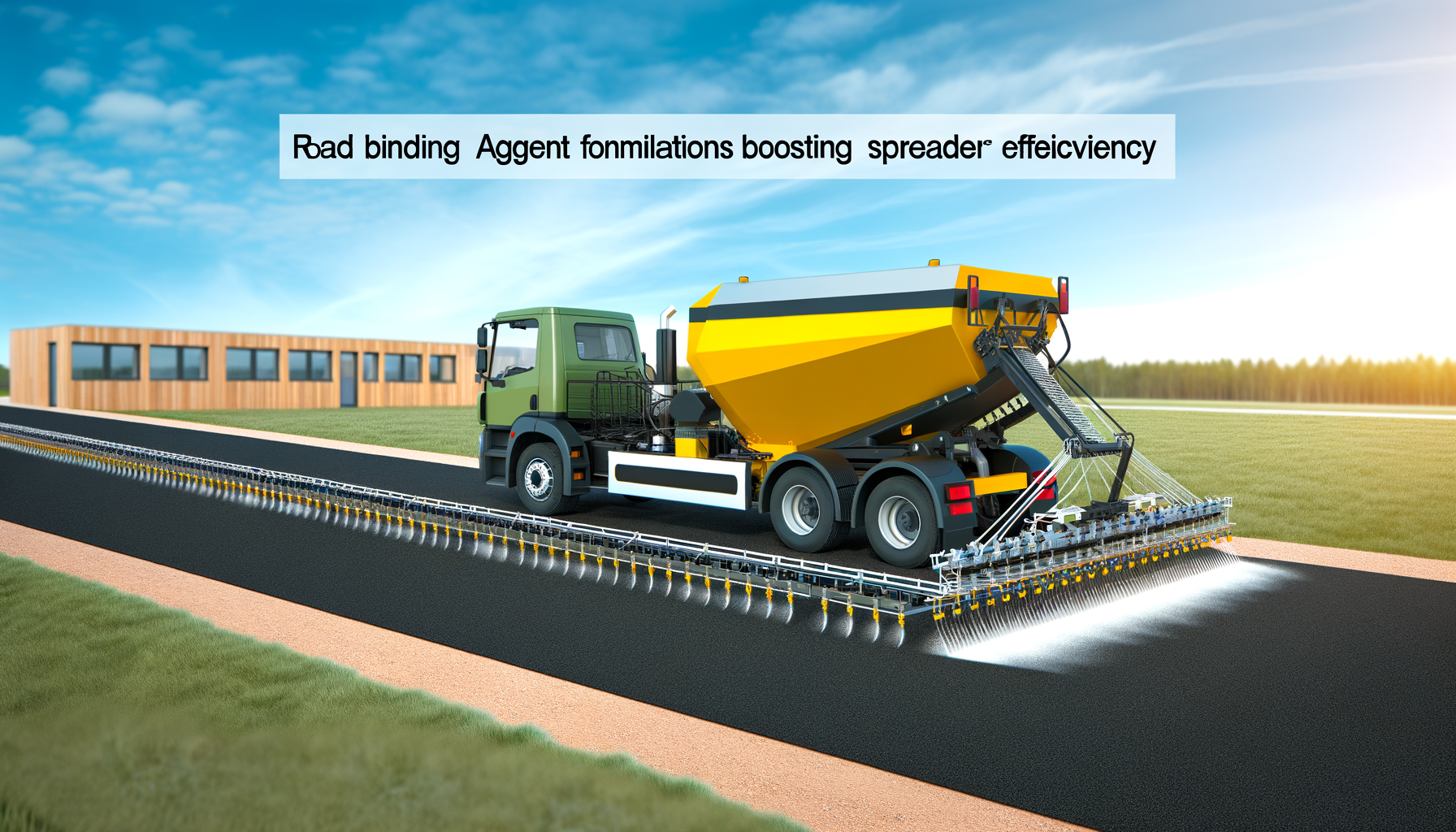
In the ever-evolving sector of road construction and maintenance, efficiency and innovation remain at the forefront of industry goals. As urbanization accelerates and the demand for robust infrastructure surges, leveraging cutting-edge technologies becomes imperative. Among these advancements lie innovations in binding agent formulations and their profound impact on the efficacy and efficiency of road binding agent spreaders.
The Essential Role of Binding Agents in Construction
In road construction, binding agents act as the glue holding aggregates together, ensuring durability, load-bearing capacity, and resistance to weather-induced wear and tear. Traditionally, bitumen has been the mainstay binding agent, but recent formulations have introduced a suite of benefits that modernize both the materials used and the equipment operating systems.
Emerging Trends in Binding Agent Formulations
As the climate crisis and environmental concerns rightfully gain attention, there's a notable shift towards sustainable binding agents. Biodegradable and eco-friendly alternatives are being developed to reduce the carbon footprint of road construction. These innovative formulations offer not just environmental advantages but also bolster performance.
1. Eco-Friendly Options
Biopolymers and Plant-Based Agents: Inspired by nature, these agents offer excellent adhesion properties while decomposing harmlessly post-usage.
Recycled Waste Oils: Harnessing industrial waste oils, manufacturers are producing greener binding options, thus contributing to waste reduction and cost-efficiency.
2. Performance-Enhancing Additives
Nanoscale Additives: Incorporating nano materials can improve binding strength, longevity, and resistance to environmental conditions.
Thermo-Stabilizers: These additives maintain the binder's efficacy over a broader temperature range, apt for areas experiencing extreme weather variations.
Transformative Impacts on Spreader Equipment
Spreader technologies are catching up with these innovations, adapting to efficiently dispense the new-age binders and ensuring optimal resource utilization.
1. Calibration and Precision Improvement
Advanced binding agents are formulated to perform under precise application, necessitating finely-tuned calibration in spreader settings:
Precision Dispensing Systems: Enabled by advancements in digital technology, spreaders can now measure and apply with unprecedented accuracy.
Automated Sensors: Real-time monitoring allows for the automatic adjustment of spread rate to adapt to varying site conditions.
2. Enhancing Spreader Design
The formulation of binding agents directly influences equipment design enhancements:
Compact and Multi-functional Spreader Designs: Compact spreaders allow for effective deployment in confined spaces, increasing versatility by accommodating both traditional and innovative binders.
Energy-Efficient Drive Systems: Utilizing energy-efficient systems directly contributes to greener construction practices and aligns with the global sustainability agenda.
Case Studies of Innovation in Action
To illustrate the transformative impact of these innovations, consider these real-world applications:
Case Study 1: Biopolymer Binders in Scandinavian Roads
Amidst rigorous environmental regulations, Scandinavian countries are leading in incorporating biopolymer binders. Projects saw a 30% increase in pavement durability while reducing environmental impact substantially. Consequently, spreader performance was optimized by sensor-equipped machinery ensuring consistent application.
Case Study 2: Nanoscale Binder Testing in Australia
In Australia's dynamic environments, highway upgrades are featuring nanoscale-polymer-infused binders with promising results. The acquired binding strength is proving to withstand temperature variations, aided by modern spreaders maintaining precise application.
The Road Ahead: Challenges and Opportunities
Change is never devoid of challenges. Manufacturers and construction entities are increasingly aware of the learning curves accompanying new formulations. Addressing compatibility issues between innovative binders and traditional spreaders remains paramount.
Upskilling and Training
As innovative formulations permeate the market, training programs for construction staff on operating advanced spreaders become crucial. Bridging this knowledge gap optimizes performance and ensures uninterrupted project timelines.
Cost-Benefit Analysis
While novel binders promise enhanced performance, comprehensively assessing their long-term economic implications remains necessary. Initial costs may be higher, but the trade-off with extended infrastructure lifespan often justifies the investment.
Conclusion
Amidst the dynamic landscape of road construction, the synergistic relationship between binding agent formulations and road spreaders charts a promising future. As the industry turns to sustainable practices and adopts state-of-the-art technology, these innovations herald an era of more durable, sustainable, and efficient infrastructure, benefiting both communities and the planet. In embracing this evolution, we align with the global commitment to sustainability, emphasizing progress for both commerce and compassion.
Explore Comprehensive Market Analysis of Road Binding Agent Spreader Market
Source - @360iResearch